Chimney Repairs | Chimney Relining
Call: +353 872805825

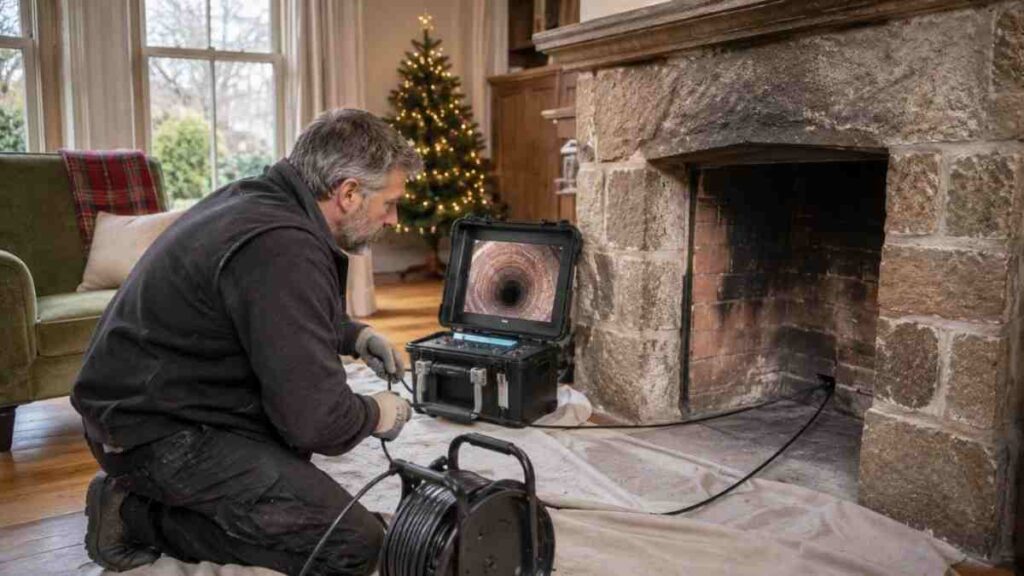
There is something particularly inviting about a fireplace in December. The room that spends much of the year quietly accommodating a television and a bookshelf suddenly becomes the place everybody wants to sit.
Before that first Christmas fire, though, there is a less picturesque question worth asking: when was the chimney last checked?
A chimney inspection before Christmas is a sensible consideration if the fireplace has been unused, its maintenance history is unclear or something has changed since last winter. Modern CCTV equipment can help investigate the inside of a flue, but the right starting point depends on the chimney and how it has been used.
November gives you time to establish what is needed before the house fills with visitors and lighting the fire becomes part of the evening.
Why is November a good time to check your chimney?
Checking the chimney in November leaves room to deal with findings before Christmas. If cleaning identifies a concern that needs further investigation, you have an opportunity to understand it and arrange any necessary work.
That matters whether your stove heats the house every evening or the sitting-room fireplace is reserved for special occasions. An occasional fire still needs a suitable, maintained chimney.
Start by finding the record of the last sweep or service. If you cannot remember when it happened, mention that when booking.
Irish fire-safety guidance recommends having chimneys cleaned at least once a year. Your appliance instructions, fuel and pattern of use may call for more frequent attention, so an annual date should not replace advice specific to your installation.
Does my chimney need sweeping, a CCTV inspection or both?
Sweeping removes soot and deposits from the flue. A CCTV survey helps examine its internal condition. The two jobs serve different purposes, and a camera does not do the work of a brush.
A regularly maintained chimney with no reported problems may need routine sweeping and the checks appropriate to that installation. A chimney with an uncertain history, suspected damage or unexplained symptoms may warrant a more detailed investigation.
It is worth explaining the situation when booking. “We would like the chimney checked” could mean anything from an overdue sweep to smoke appearing in an upstairs bedroom. Those are different enquiries.
Tell the specialist when the chimney was last used, whether the appliance has changed and what prompted your concern. Ask what the proposed visit includes and whether further testing might be needed.
A good assessment should explain why a particular service is recommended. Christmas approaching does not, by itself, mean every household needs a full CCTV survey.
What can a CCTV chimney inspection actually show?
A specialist camera allows an examiner to view accessible internal flue surfaces that cannot be properly assessed by looking up from the hearth. It can help investigate visible liner damage, obstructions and deposits.
Access Chimneys sweeps the flue before its CCTV survey so that soot does not obscure the view. Depending on access, the survey can proceed from the fireplace upwards or the chimney pot downwards. The footage is then assessed and a written condition report prepared.
The useful part is the interpretation. An image should help answer a practical question: what has been found, why does it matter and what should happen next?
There are limits. A camera shows visible surfaces; it cannot see through masonry or establish every aspect of an installation’s performance. Depending on the concern, smoke testing, draught measurements or other checks may also be appropriate.
Modern equipment helps gather evidence. Professional judgement determines what that evidence means.
When should I arrange an inspection before lighting the fire again?
An uncertain maintenance history is a reason to seek advice. Smoke entering rooms, suspected flue damage or a previous chimney fire calls for a more specific investigation before further use.
Access Chimneys identifies smoke smells in other rooms, visible cracking or smoke staining, a change of appliance and a recent chimney fire among the reasons to consider a CCTV survey.
The details you provide can be valuable. Does smoke enter only when lighting the fire, or while it is established? Is the smell confined to the sitting room, or noticeable upstairs? Did the behaviour change after building work?
Avoid trying repeated fires to see whether an unexplained problem clears itself.
Tell the specialist about alterations to the house, too. Ireland’s carbon monoxide guidance notes that changes such as new double-glazed windows or an extension can affect the safety or efficiency of heating installations. Ventilation needs to be considered alongside the flue’s condition.
If something has changed since last winter, contact Access Chimneys and describe it before booking. That gives the team a clearer basis for recommending the appropriate visit.
Can I light a fireplace that has been unused for years?
Do not assume an unused fireplace is ready simply because the hearth looks clean. Before bringing it back into service, have its condition and suitability assessed by a competent professional.
The fireplace opening tells you little about the full route above it. Nesting material or another obstruction may be hidden out of sight, preventing smoke and combustion gases from leaving as they should.
There may also be gaps in the history. Perhaps the previous owner stopped using the fireplace, changed the appliance or had work carried out without leaving records. Those uncertainties are worth resolving before a festive fire.
A small “test fire” is not a substitute for an assessment. Nor does smoke leaving the chimney prove that the entire installation is sound.
When booking, say plainly that the fireplace has been unused for several years. Include anything you know about previous alterations, even if it seems minor.
What should I ask after a chimney inspection?
Ask for an explanation that connects the findings to the recommended action. You should understand what was examined, what could not be assessed and whether further investigation or repairs are required before use.
Useful questions include:
- What did the inspection establish?
- Were any areas inaccessible or obscured?
- Is cleaning sufficient, or is another test needed?
- If repairs are recommended, what defect would they address?
- Should the fireplace remain unused until the work is complete?
Keep the report with your appliance and maintenance records. It provides something more useful than a half-remembered conversation when the next service comes around.
Where a defect is identified, ask for the evidence and the options. You should come away understanding what your chimney needs, including when the findings do not justify major work.
How can I make the fireplace area safer for Christmas?
Once maintenance is addressed, look at how the room will change for December. A fireplace that normally has clear space around it can acquire a tree, gift bags, trailing greenery and a row of stockings surprisingly quickly.
Fire Ireland advises keeping Christmas trees, cards and decorations away from heaters and open fires, and using a fireguard with an open fire. Arrange decorations around the fireplace’s safe operation rather than moving them aside each time somebody wants to light it.
Keep wrapping paper and packaging out of the fire. Fire Ireland’s stove and chimney guidance says never to burn household waste and to use only the fuel recommended for the appliance.
Ash deserves attention too. Embers can remain hot for days. Follow fire-service advice to place ashes in a metal bucket with a metal lid, outside and away from buildings.
Finally, check your alarms. Test smoke alarms weekly. Check carbon monoxide alarms according to their instructions, including their replacement dates. An alarm is an essential safeguard, but it does not replace maintenance.
Sources: Fire Ireland Christmas advice and Fire Ireland chimney and stove safety leaflet.
What else do homeowners ask about chimney checks before Christmas?
Can a CCTV inspection guarantee there will be no chimney fire?
No. Inspection can help identify concerns within its scope, but it cannot guarantee future safety. Necessary repairs, suitable fuel, correct operation and ongoing maintenance still matter.
Does a chimney need another sweep if it was cleaned in September?
Not automatically. Explain how much it has been used since then and follow the appliance instructions and your sweep’s advice. New smoke problems or other concerns deserve attention even after a recent clean.
Can a carbon monoxide alarm tell me whether the chimney needs cleaning?
No. It detects carbon monoxide; it does not measure soot or certify the condition of a flue. Carbon monoxide is colourless and odourless, so smell cannot establish whether it is present.
If a CO alarm sounds, get everyone into fresh air and seek professional assistance. Do not reuse the appliance until it has been checked. If anyone is unwell or exposure is suspected, seek urgent medical help; call 112 or 999 in an emergency.
What should I do if I suspect a chimney fire?
Get everyone out and call 112 or 999. Do not delay evacuation to investigate or attempt repairs. Before using the fireplace again, arrange professional assessment and any necessary remedial work.
How can Access Chimneys help me prepare for Christmas?
Access Chimneys provides CCTV chimney surveys and can discuss whether that is the appropriate next step for your fireplace or stove. Have your maintenance history and a description of any concerns ready when you enquire.
November is a useful moment to settle those questions, while there is still time to investigate and address anything that needs attention.
If you are planning to use the fireplace over Christmas and are unsure about its condition, contact Access Chimneys to discuss what should be checked before you light it.
